
IS WINE ART?
AN EXPLORATION OF AESTHETICS

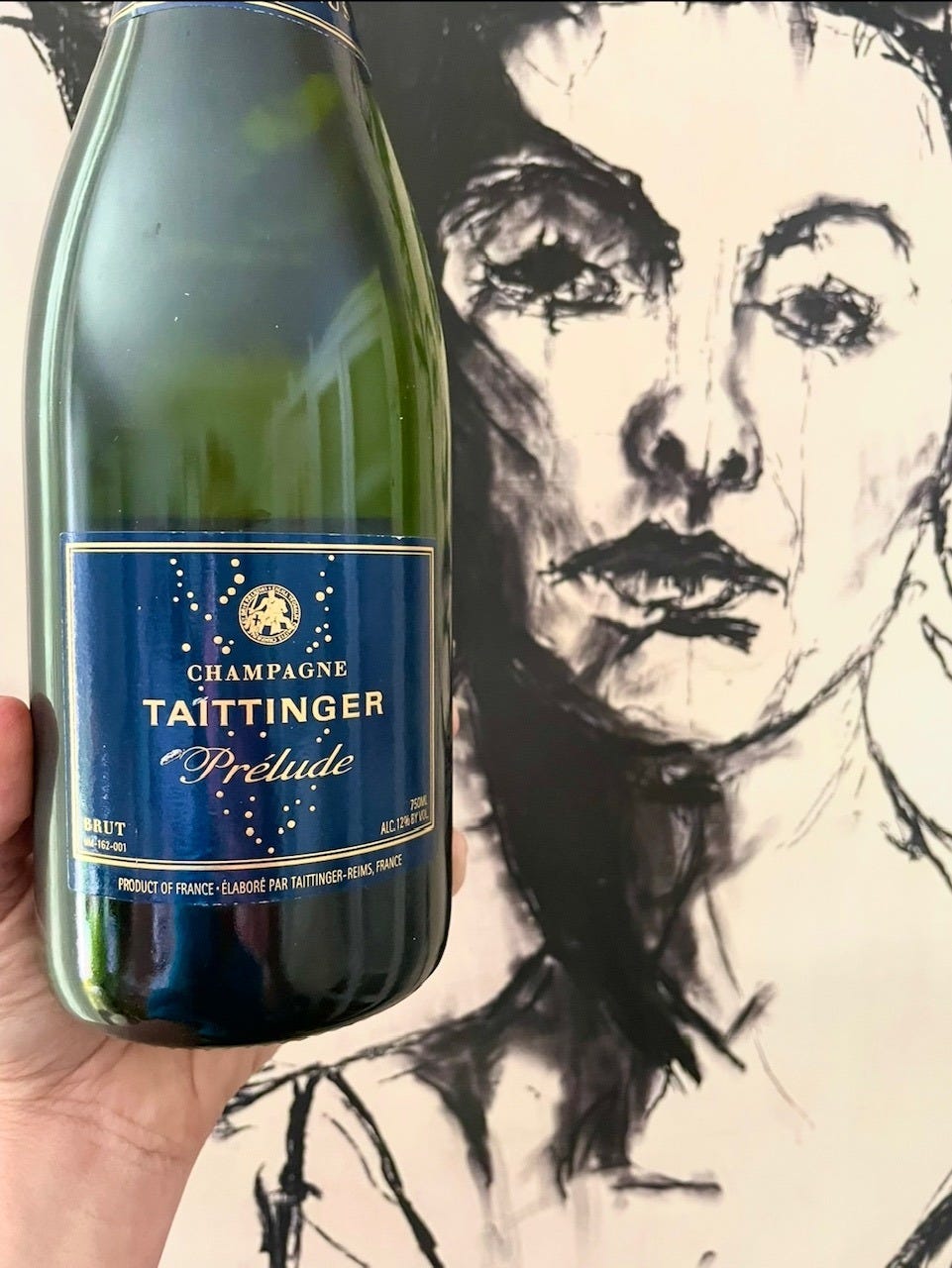
This is the first in a series I am writing about wine, art, aesthetics, music, and how thoughtful pairings elevate your favorite glass, work of art, musical score, and your life.
I have always been an aesthete, an appreciator of the arts, fine and performing, and have often wondered what makes art “art-worthy.” I understand the sublime beauty of Joshua Bell playing Chopin’s Nocturne on his Stradivarius violin, or Misty Copeland dancing Marcelo Gomes’s Paganini, or lingering over the Old Masters in the Prado Museum in Madrid. But what makes these things art? Every art lover knows there is something ineffable about recognizing true art at a glance, or hearing discordant music and sensing that it is not quite melodious. What, exactly, defines an aesthetic musical score, dance performance, or work of fine art? Why does one painting achieve greatness when another does not? And what does this have to do with wine?
Can wine, the object itself, be art?
Or must it be surrounded by beauty and consumed with anticipation and context to truly shine?
If you stumble across a dusty Picasso leaning against the wall of a barn, is it as arresting as encountering the same work in a museum? Is it still art?
Working in the multifarious world of wine and embracing the pursuit of formal wine education is fascinating in its cosmopolitan and provocative nature. Philosophical ponderings creep in with every sip and every conversation, especially those contemplative exchanges that unfold after hedonistic evenings of fine dining in luxurious settings filled with music, flowers, and finery. The wine curious and the deeply initiated alike linger, glass in hand, debating the intoxicating elixir before them.
A decade of these wine-imbued affairs led me back to the ivory tower, where I immersed myself in a deep exploration of the cultural elements surrounding wine. It was there, among dusty books and cerebral inquiry, that my lifelong questions about fine art found a framework in aesthetic philosophy.
My graduate studies took me through wine regions, museums, and performances of music and dance, all examined through a singular lens: what constitutes aesthetic experience? This inquiry ultimately shaped my master’s thesis on the aesthetics of wine. Along the way, I uncovered compelling intersections between the formal qualities of the wine object and those of fine art, particularly painting. In this series, I will guide you through these ideas, inviting you into a world where perception moves fluidly from glass to gallery.
Simone FM Spinner & Chasing Grapes™ is a reader-funded publication. There are no ads here, only independent writing devoted to celebrating wine culture, travel, and a beautiful way of living.
If you’ve been thinking about supporting my work, becoming a paid subscriber is the most meaningful way to do it:
With the new annual subscription discount, it costs less than a glass of your favorite wine a month — and it’s what keeps all of this going. Gift subscriptions to Simone FM Spinner & Chasing Grapes™ are now available too.
So, is wine art?
It is a deceptively simple question, just three words, yet its answer is intricate and layered. At first glance, it appears binary. Yes or no. But with deeper consideration, its complexity reveals itself through nuance, context, and experience.
Is wine art? What do you think?
Many answer quickly and confidently. Oenophiles often respond with an emphatic yes. Those within the wine trade, winemakers, critics, educators, and writers, frequently assert that wine, at its finest, is indeed art. Others argue just as firmly that wine is craft, an artisanal product born of agriculture and technique. Yet even here, the language blurs. The root of artisanal is, of course, art.
According to the Stanford University Philosophy Department, often referred to as the Plato Pages, “Art is a diverse range of human activities in creating visual, auditory, and performing artifacts, expressing the author’s imaginative or technical skill, intended to be appreciated for their beauty or emotional power… the term ‘aesthetic’ has come to designate a kind of object, a kind of judgment, a kind of attitude, a kind of experience, and a kind of value.” Crucially, aesthetic theory has long debated whether artworks must be aesthetic objects at all.
Historically, philosophers from Aristotle onward largely excluded taste and smell from serious aesthetic consideration. Food and beverages were not granted the same status as painting or music. A beautifully composed plate of sushi, or an elaborate wedding cake, has traditionally not been considered fine art. Yet in our contemporary moment, shaped by visual culture and digital storytelling, chefs, pastry artists, and culinary designers actively create and present their work as art, carefully staged, photographed, and experienced.
This is where modern thinking begins to shift.
Today, the field of cross-modal perception, explored extensively by researchers such as Charles Spence, demonstrates that our sensory experiences are not isolated. Sight, sound, taste, smell, and texture interact continuously, shaping perception in profound ways. Music can alter how we perceive acidity. Color can influence sweetness. Environments can transform memory. What we taste is never just what is in the glass. It is what we see, hear, feel, and remember, all at once.
Aesthetics, then, is not only about the object. It is about the experience.
Some philosophers argue that beauty resides in composition, in the object itself. Others insist that beauty emerges through engagement, shaped by context and emotion. The thrill of encountering a Picasso in a museum, the wonder of the Aurora Borealis, or the quiet awe of a peach and magenta sunrise are all aesthetic experiences. They are not merely seen, they are felt.
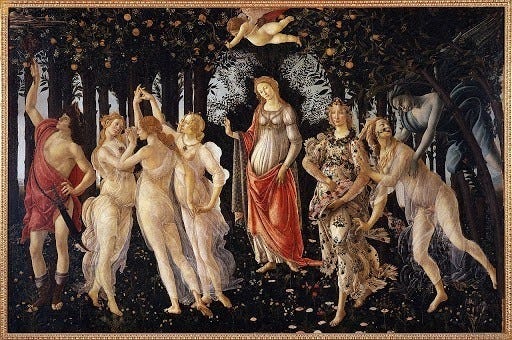
Consider Botticelli’s La Primavera. Is it beautiful as an object, or does its beauty exist in the emotional response it evokes? I would argue both. The object holds inherent qualities, but the experience completes it.
Why, then, should wine be any different?
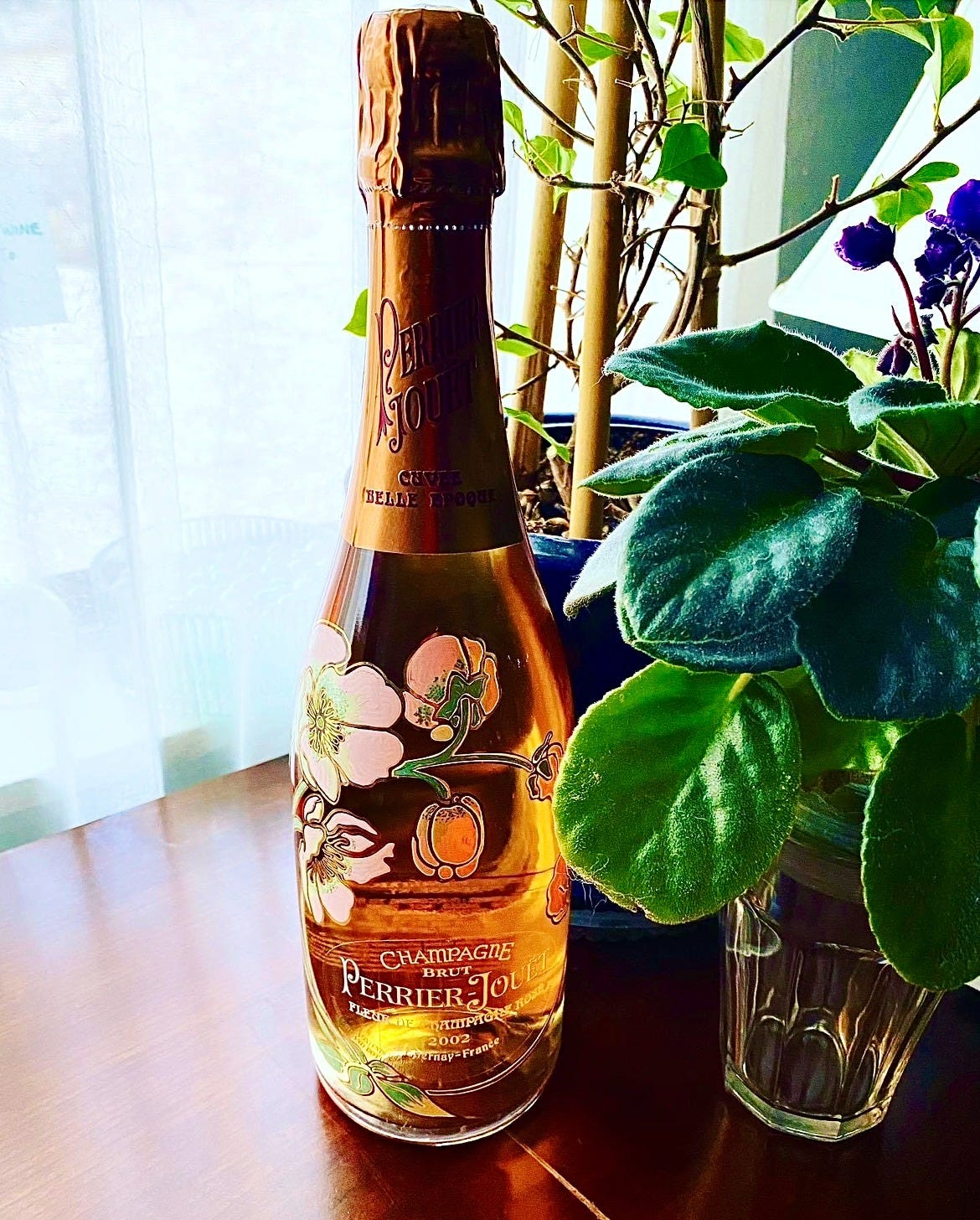
Is a glass of Perrier Jouët Belle Époque Fleur de Champagne Rosé beautiful to observe, or is its beauty revealed only in the sip?
I argue that it is both.
The visual elegance, the effervescence, the aroma, the texture, and the taste converge into a singular, layered experience.
We consume fine art with our eyes and music with our ears. Wine, however, is consumed physically, yet processed through a convergence of senses. It is seen, smelled, tasted, and felt. It is, by nature, multisensory. The liquid glides across the palate, releasing aromas and flavors that ignite memory: green apple, lemon, lime, Morello cherry, spice, vanilla, violet.
Each note is not only perceived but remembered, connected to moments, places, and emotions.
This is where wine transcends objecthood.
It becomes experience.
It is my conclusion that certain wines, carefully cultivated and crafted, may indeed be considered art objects. Yet the deeper truth lies in the aesthetic experience itself. That is where wine achieves its greatest expression.
Imagine being in love, walking arm in arm along the Seine in Paris, settling into a café, watching the Eiffel Tower shimmer as you sip a glass of Loire Valley wine. That wine becomes unforgettable, not solely because of its composition, but because of the moment it inhabits. Now take that same bottle home, open it on an ordinary Thursday evening with takeout Thai in front of the television, and it will never taste quite the same.
The wine has not changed.
You have.
And that, perhaps, is the beginning of understanding wine not just as an object, but as an aesthetic experience shaped by the full orchestration of the senses.
I would love to hear your thoughts, impressions, and experiences around wine as art. Let’s talk!
#WriteOn
#PairWineArtMusic™©
Is Wine Art? An Exploration of Aesthetics ©2026 Simone FM Spinner
Subscribe & Follow for more insights into wine, travel, and a life of quiet luxury. Sometimes, it isn’t what you think!
#wine #winetasting #winesensorybrainattic
Coming Soon – my new book: The Only Thing You Need to Know About Wine is What You Like: The Essential Guide to Wine
Follow Me: @chasinggrapeswithsimone @simonefmspinner 🥂
📸Simone FM Spinner ©2026 Chasing Grapes™ Wine Rocks® Hawk House Media© All Rights Reserved Images Simone FM Spinner 🥂
Not paid, just love.
no